-min.png)
Choosing Materials for Custom Reusable Bags: Cotton, Canvas, Mesh and Polyester

Updated: 5 days ago
Choosing the right material is one of the most important decisions in a custom bag project.
The material affects the bag’s appearance, weight, durability, printing options, construction and intended use. There is no single material that is best for every application.
Below is a practical overview of some of the most common materials used in custom reusable bag manufacturing.
1. Cotton
Cotton is widely used for tote bags, grocery bags, drawstring bags and promotional bags.
It offers a natural textile appearance and can be produced in different fabric weights depending on the intended use.
Common considerations include:
• Natural or dyed fabric
• Fabric weight
• Handle construction
• Printing method
• Bag dimensions
• Intended carrying weight
Cotton bags are commonly used where appearance, branding and a natural fabric feel are important.
2. Cotton Canvas
Canvas is a heavier and more structured cotton fabric.
It is commonly selected for bags that require a more substantial feel or greater durability.
Canvas can be suitable for:
• Retail tote bags
• Branded merchandise
• Promotional bags
• Shopping bags
• Private-label products
At Wholesale Bag Factory, cotton and canvas bags are commonly produced in fabric weights ranging from approximately 120–320 GSM, depending on the product and application.
3. Cotton Mesh
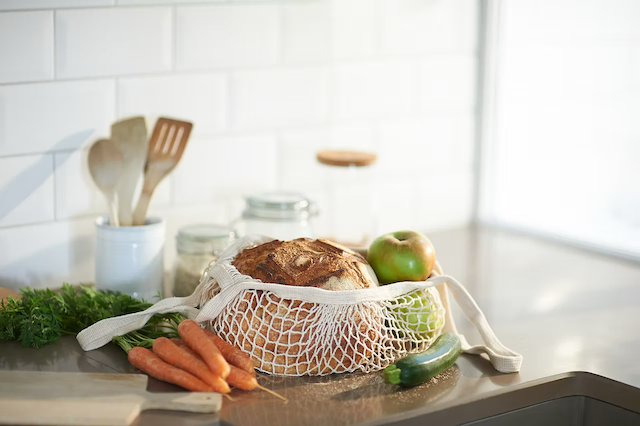
Cotton mesh is commonly used for produce bags, grocery bags and lightweight carrying applications.
Its open construction provides ventilation and reduces the overall amount of fabric used in the bag.
Mesh construction can vary depending on:
• Opening size
• Yarn thickness
• Fabric weight
• Bag dimensions
• Closure type
Cotton mesh bags can be manufactured with drawstring closures, handles or combinations of mesh and solid cotton fabric.
4. Polyester
Polyester can be useful where lower weight, durability or moisture resistance is required.
It is commonly used for:
• Laundry bags
• Drawstring bags
• Travel bags
• Promotional products
• Custom utility bags
Polyester fabric specifications vary according to the construction and intended use.
Different printing and branding methods may also be suitable depending on the fabric surface.

5. Non-Woven Materials
Non-woven materials are another option for lightweight promotional, retail and event bags.
They can be suitable for projects where the buyer requires a simple, lightweight bag construction.
Material thickness, handle style, printing method and overall construction should be confirmed before production.
6. Choosing the Right Custom Reusable Bag Materials and Fabric Weight
Fabric weight is usually measured in GSM, or grams per square meter.
Higher GSM does not automatically mean that a material is better. The appropriate weight depends on the bag design and intended application.
For example:
• Lightweight bags may require lower GSM fabrics
• Retail tote bags may benefit from a more structured material
• Heavy-duty carrying applications may require stronger fabric and reinforced construction
For cotton and canvas projects, Wholesale Bag Factory commonly works within an approximate range of 120–320 GSM.
7. Consider Printing and Branding
Material selection should also take the required branding method into account.
Available options may include:
• Screen printing
• Digital printing
• Printed logos
• Woven labels
• Sewn labels
• Care labels
• Barcode labels
Some materials and surface structures are more suitable for particular printing methods than others.
For this reason, artwork and branding requirements should be reviewed together with the material specification.
8. Consider the Intended Use
Before selecting a material, define how the bag will actually be used.
Important questions include:
• What will the bag carry?
• How much weight should it support?
• Will it be used repeatedly?
• Does it require ventilation?
• Does it need to fold compactly?
• Is printing important?
• Will it be sold at retail?
• Does it require custom packaging?
These factors usually provide a better basis for material selection than choosing a fabric based only on appearance or price.
9. Request a Sample
For custom production, reviewing a sample can help confirm whether the selected material and construction are suitable.
A sample allows the buyer to evaluate:
• Fabric feel
• Weight
• Dimensions
• Stitching
• Printing
• Labels
• Handles
• Packaging
Wholesale Bag Factory’s standard sample fee is €250 per design and is refundable with a qualifying bulk order.
Sample delivery typically takes approximately one week.
10. Custom Material Specifications
Wholesale Bag Factory manufactures custom bags using cotton, canvas, mesh, polyester, non-woven materials and other suitable textile constructions.
Our typical minimum order quantity is 2,000 pieces, depending on the product, material and project requirements.
Standard bulk production and delivery typically takes 20–30 days after specifications, artwork and the initial payment are confirmed.
Which Material Is Right for Your Project?
The right material depends on the intended use, required durability, appearance, printing method, dimensions and budget.
Rather than selecting a material based on one factor alone, buyers should consider the complete product specification.
For a quotation, send us the bag type, dimensions, quantity, preferred material, fabric weight if known, branding requirements and delivery country.


Comments